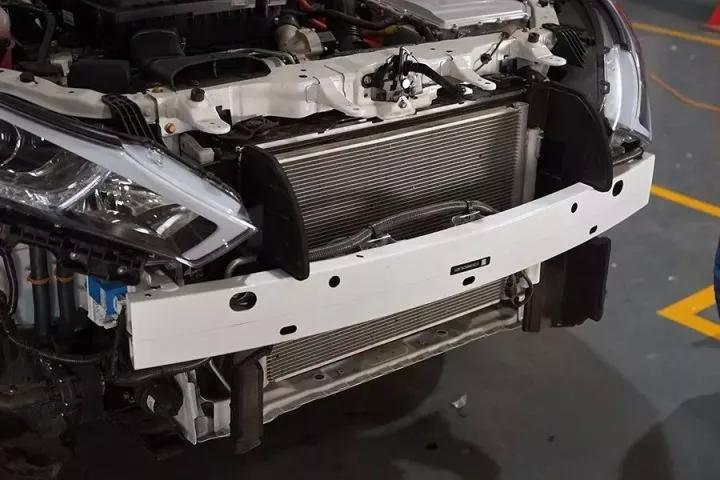
As the global automotive industry advances toward electrification and higher safety standards, material selection for key safety components has become a core focus. The automotive anti-collision beam, a frontline safeguard for passengers, increasingly adopts galvanized duplex steel. Industry data shows its application rate in automotive safety components has risen 35% in five years, driven by performance advantages matching modern manufacturing needs.
Galvanized duplex steel’s widespread use primarily stems from its excellent balance of high strength and ductility. With a ferrite matrix and dispersed martensite, it boasts tensile strength over 780 MPa and elongation above 14%, outperforming traditional high-strength steel. It absorbs 40% more impact energy in collisions, protecting passengers effectively. “Balancing strength and ductility is crucial for safety parts, and this steel excels here,” said a senior materials engineer at a top automaker.
Corrosion resistance is another key driver. Exposed to rain, snow and road salt, the automotive anti-collision beam needs long-term durability. The hot-dip galvanized coating of duplex steel forms a dense protective layer, withstanding 480 hours of salt spray testing. This extends its service life by over 10 years, cutting maintenance costs for manufacturers and consumers.
Additionally, galvanized duplex steel supports automotive lightweighting. Amid stricter emission regulations, reducing vehicle weight is vital for fuel efficiency and EV range. Compared to traditional steel, it reduces safety component weight by 15-20% without losing strength, a key advantage for EVs to boost battery performance.
Experts predict advancing galvanizing and steel production technologies will further improve galvanized duplex steel’s performance, solidifying its role in safety component manufacturing. As consumers prioritize safety and environmental friendliness, demand for this high-performance material will grow steadily.