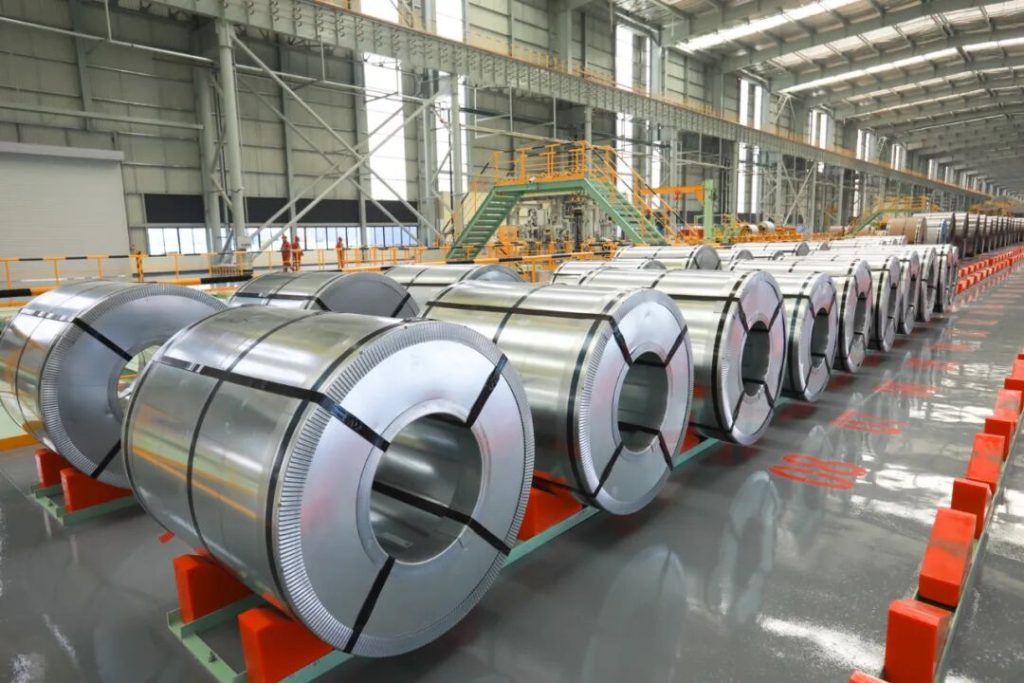
Hunan’s Lianyuan Steel (LISCO) has officially passed the government acceptance review for its project on “Thin‑Gauge Premium Non‑oriented Silicon Steel for New Energy Vehicle Drive Motors.” The announcement came from the Hunan Provincial Department of Industry and Information Technology on July 15, 2026.
The two‑year project (2024–2025) was led by LISCO and involved four partners: Hunan Lianyuan Electromagnetic Materials, Hunan Steel Group Research Institute, Zhongda Continuous Casting Center, and Suzhou Yingci New Energy Technology. Their goal was to solve a common problem in electric motors – how to make thinner steel that still offers high speed, strong torque, good shaping ability, and low cost.
The team developed seven key technologies, including better control of magnetic elements, improved edge quality, stable hot‑rolling of thin strips, crack prevention, uniform thickness, and advanced testing methods. These improvements directly enhanced the performance of Non‑oriented silicon steel, especially for high‑voltage, high‑speed motor designs.
As a result, LISCO now offers 23 different steel grades in three product families. During the project, they filed 29 patents, published four papers, and contributed to two national standards. Four real‑world vehicle applications have already been tested, showing efficiency gains of 2.5–3.8%.
Today, LISCO has become central China’s largest silicon steel production base, with an annual capacity of 3 million tons of substrate and 500,000 tons of finished products – including 400,000 tons of high‑grade Non‑oriented silicon steel and 100,000 tons of grain‑oriented types. Thickness can go down to 0.20 mm.
The company views silicon steel as one of its three strategic pillars, along with automotive and high‑strength steels. Moving forward, LISCO plans to invest more in R&D, develop even thinner grades (0.15–0.18 mm), and work closely with EV makers to reduce reliance on imports. The project’s success helps Hunan Province advance its manufacturing goals while supporting lighter, more efficient electric vehicles.